Boomers in Space
How the Original Trilogy pacified the post-war generation.
Last week I sat through the Lotus Eaters’ debate on the Star Wars prequel trilogy in Swindon, where they discussed whether the prequels were good or bad, and why the younger generations seemed to prefer them to the originals. To me, this misses the point, as the debate takes as a given the standard narrative around the original trilogy - a narrative that is in need of serious reassessment.
The original Star Wars trilogy is usually analysed as an example of modern myth-making, as a commercial success or through its obvious anti-imperial themes. But, protected by a seal of sentimental nostalgia, it is rarely, if ever analysed from the outside, as a critique of the culture and process that created the films in the first place. Through this lens a different picture emerges, and we find that Lucas’ works are not a visionary glimpse of a potential future, nor a foundational modern myth. Rather, they become seen as cultural parasites - reinforcing and transmitting the post-war cultural order, pretending that the aesthetics and emotional authority of older traditions can exist after the moral and structural constraints that created them have been discarded.
This work argues that the films should be seen as post-war ideological artefacts, and as one of the most efficient mass-cultural expressions of what Academic Agent (Neema Parvini) has termed the Boomer Truth Regime (BTR). Further, I extend his sociological critique, and argue that the treatment of technology within the trilogy embeds a progressive optimism into mainstream culture that had already been erased or tempered within much of its contemporary works of science fiction.
For the uninitiated, the BTR is not just the dominant mindset of our largest demos, but the top-down ideological framework that has shaped and dominated society since the end of the World Wars. At its core, it champions the tearing down of traditional hierarchy and religious constraint in the name of absolute self-expression, while beings constantly vigilant against the spectre of the “ultimate evil” of fascism.
Within this framework, Star Wars becomes the quintessential ideological therapeutic. A highly effective mass-media spectacle that allows the audience to experience the emotional rewards of traditional heroism, while implicitly sustaining the belief that the fruits of the vine can be consumed without tending to the plant - a reversal of Johannine imagery in which sustenance is severed from its source.
Part I: Stolen Aesthetics
Despite its surface veneer, there isn’t a lot to the world of Star Wars, it is fundamentally hollow. It is hollow because Lucas did not try and build the world from scratch, but instead selectively adapted better ones. He cherry picked elements from existing creative works that he thought were cool, systematically detached them from their contingent laws and moralities, and constructed a shiny, consequence-free infantile playground.
The late philosopher Daniel Dennett coined “cranes” and “skyhooks” as two opposing ways to describe explanatory mechanisms. A crane is a grounded memetic structure, that builds complexity from the “bottom up”, incrementally, from simpler, less abstracted core concepts. The abstract concepts that a crane holds up can have their provenances interrogated through standard chains of logic, making them robust against possible critique. A skyhook, by contrast, is an “unearned” support, an imaginary claw into the heavens which memetic structures are hung on. Abstract concepts hanging off of a skyhook can only be interrogated back to other complicated, abstract concepts, there are no possible chains of logic back to solid, unarguable thought.
Dennett created these tools to criticise people who were taking explanatory shortcuts in philosophy, most notably against those to were appealing to “divine intervention” - but they can also serve as useful concepts to use when analysing fiction. A narrative crane builds from the core constraints of the world, to explain why elements of the world have to be the way in which the author depicts them. A narrative skyhook by contrast, presents the world simply as-is, without explanation, and relies on the emotive power of the story to ensure that the reader believes in its inevitability.
No creative endeavour can hope to, or should bother to, neatly explain the causality of everything within a story, all creators should be building worlds from certain ideas that they know to be solid. George R. R. Martin famously attacked Tolkien for not talking about the tax policy of the kings of Gondor, and Tolkien also didn’t do anything more than allude to the mechanics of Gandalf’s magic - but Tolkien did build his worlds carefully from certain core concepts, such as the structure of the languages of the different races of Middle Earth. This deep linguistic history is the crane that raises up the world and gives it depth. Even famously lighter and fluffier worlds like in Harry Potter possess internal cranes - Magic requires wands, precise movements and incantations; wands are constructed of certain magical materials that suit people’s individual constitutions; the social rules of wizarding society are precisely articulated. Depth produces constraint, and constraint produces coherence.
It is hard to say the same about Star Wars. The Death Star will explode if hit in a particular spot for some convenient reason, lightsabres just work, the force just “is”, and the empire is only ever evil. Lucas desired the imposing aesthetics of the works he borrowed from, but entirely refused to build the socio-economic or cultural cranes that are required to logically support them. The issue isn’t that Star Wars omits explanation, but that the world lacks the constraining logic that would make it consequential.
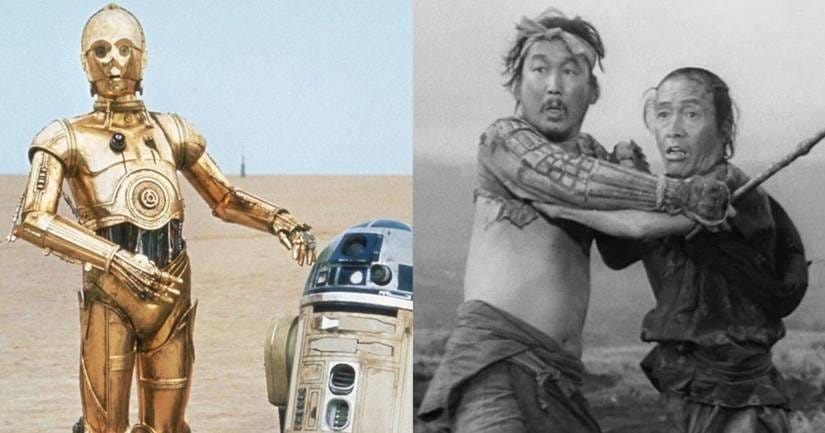
Take for example his appropriation of Kurosawa’s The Hidden Fortress for the core plot points of his A New Hope. Kurosawa’s bickering comic relief peasants are neatly transposed into the mechanical shells of C3PO and R2D2 with little adaptation. While The Hidden Fortress is one of Kurosawa’s lighter, swashbuckling films, he makes sure to anchor the narrative of the story in the harsh consequences of the Bushido code and feudal class hierarchy. Real historical circumstances serve as his cranes. His peasants start out as captives of war, made into slaves to mine for hidden gold reserves, and then spend much of the rest of the film in resentful rebellion against their samurai travelling companion. At one point they become attempted rapists. By translating oppressed peasants into literal, programmable, entirely subservient robots, and never looking at the morality of the subjugation of clearly intelligent beings, Lucas dilutes a complex social commentary into a low-resolution gag.
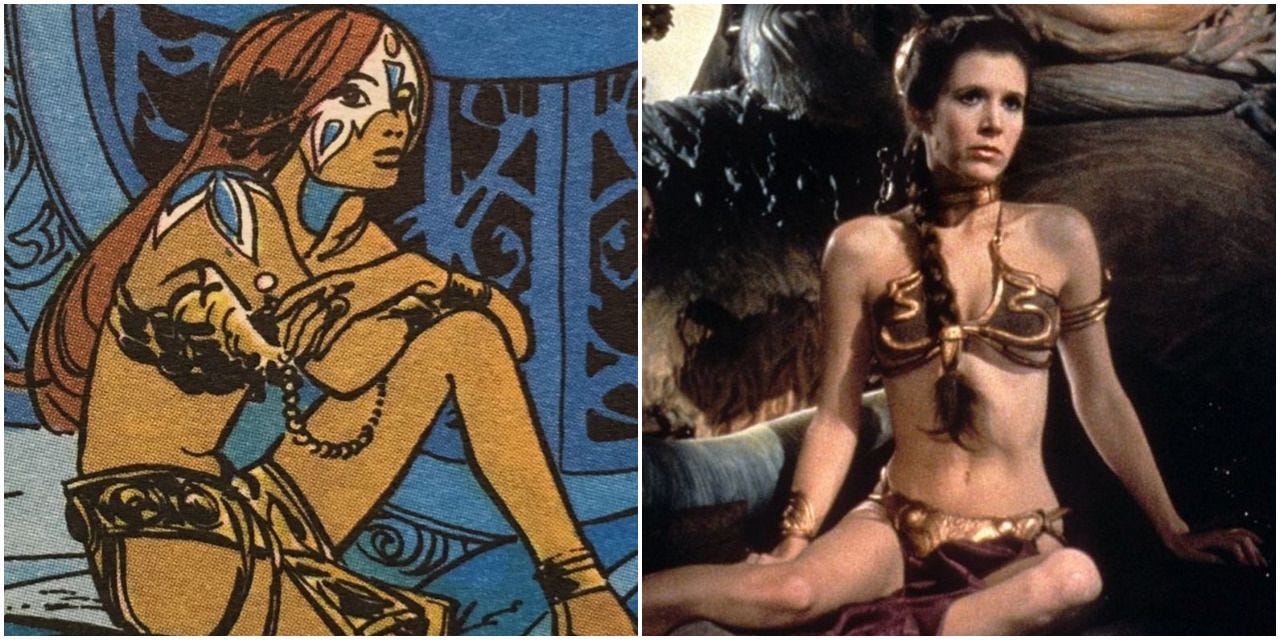
Further, Lucas mined the French comic Valérian and Laureline for much of his visual universe. Spaceship aesthetics and the design of the Millennium Falcon, carbonite freezing, Leia’s slave outfit, and the multi-species cantinas were lifted almost wholesale. In the comics, the cantinas were used as tools to explain the corruption, complexity and scale of a bureaucratic galaxy-spanning imperium. In Star Wars they serve only to keep the eyes of the viewer busy. The comic’s author Mézières was reported as being both astonished and furious after he watched the films.
The most egregious example of influences being detached from their original context however, comes from the gutting of Frank Herbert’s Dune. Herbert’s work was a rigorous exploration of deep ecology, rebellion against technology, and the power of messianic religion. Lucas took the aesthetic shell and abandoned the entire philosophical core. Arrakis became Tatooine, turning a commentary on resource scarcity into a backdrop for a restless teen. Sophisticated rituals and habits built around the conservation and preservation of water get turned into “moisture farming”. On this particular point it would be insulting to say that a “crane” was turned into a “sky hook”, as the fact that moisture is farmed instead of say, mined or imported, is of no consequence whatsoever.
The mind altering Spice, which served as the economy-driving replacement for computers after the Butlerian Jihad in Dune, becomes a throwaway line about “spice mines” that most viewers will forget. Planet-defining, terraforming sand worms become just another monster to be fought, and forgotten. The Bene Gesserit’s use of “Voice” to control political lineages becomes the “Jedi Mind Trick”, relegating generations of psychological conditioning into a parlour trick used to bypass traffic wardens.
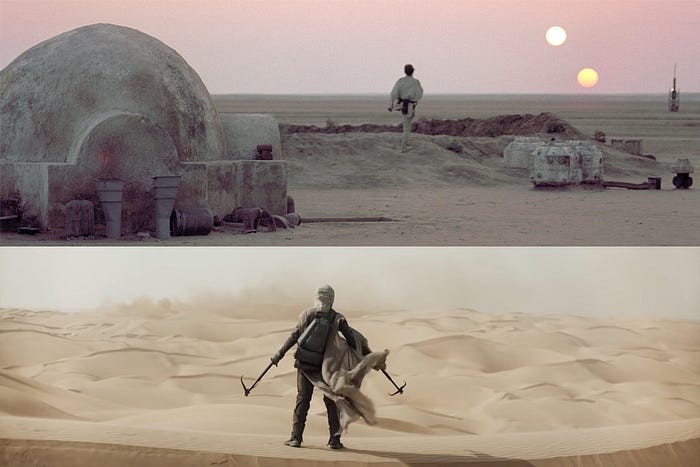
Frank Herbert joked about suing.
II: Monomyth Tyranny
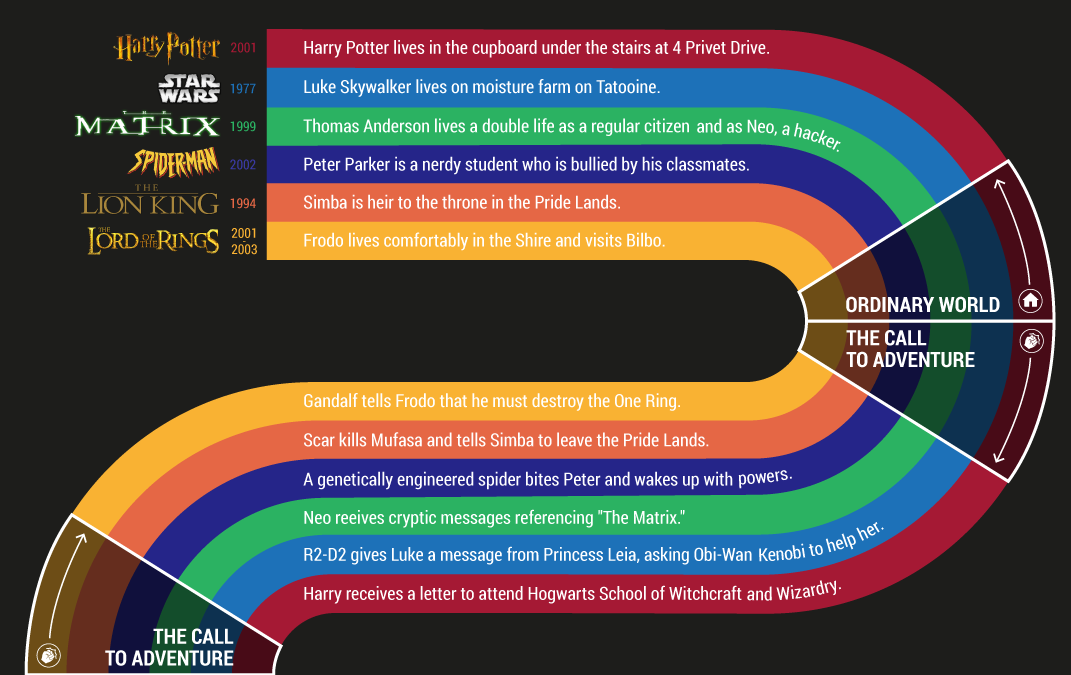
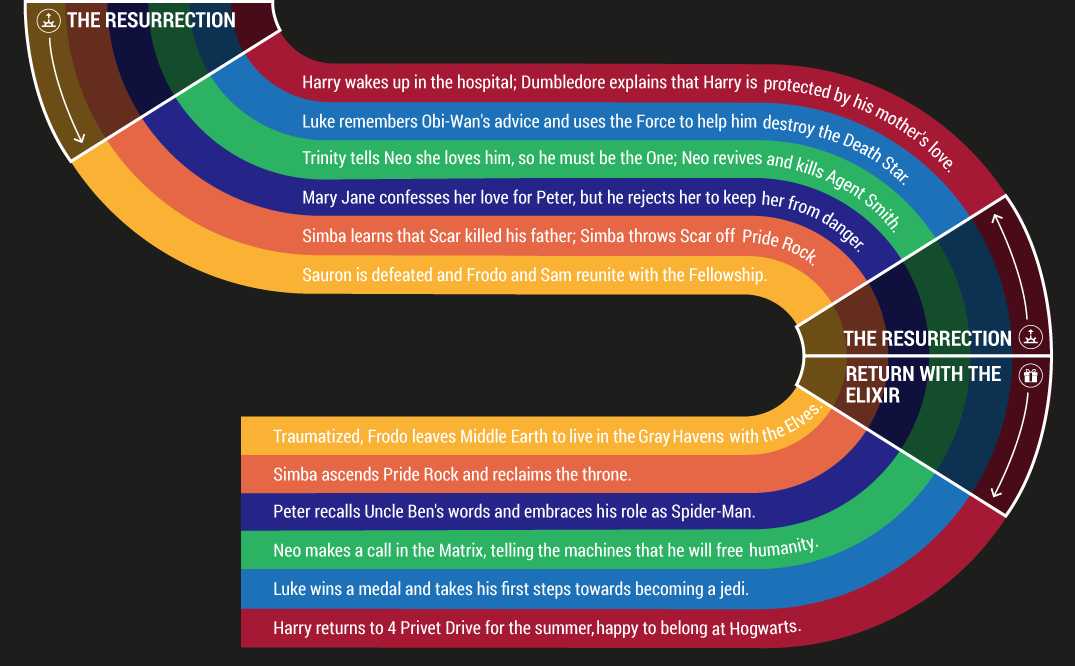
George Lucas famously and openly relied upon Joseph Campbell’s The Hero with a Thousand Faces to structure his stories. Nevertheless, rather than drawing an organic inspiration from the concept of the monomyth, Lucas used it more as a strict compliance manual. A New Hope maps onto Campbell’s Hero’s Journey so cleanly that it at times ceases to be an act of creative writing, and devolves into a somewhat sterile exercise in mythological painting by numbers.
Genuine, authentic and enduring myths regularly diverge from archetypal structures. They bend, twist and reshape the Hero’s Journey as needed to accommodate the complexities of the world, the particularities of the culture, and the autonomous desires of the characters. In Star Wars, like many modern cinematic myths that came after it, the characters are forcibly contorted to fit into the pre-ordained steps of the journey’s template.
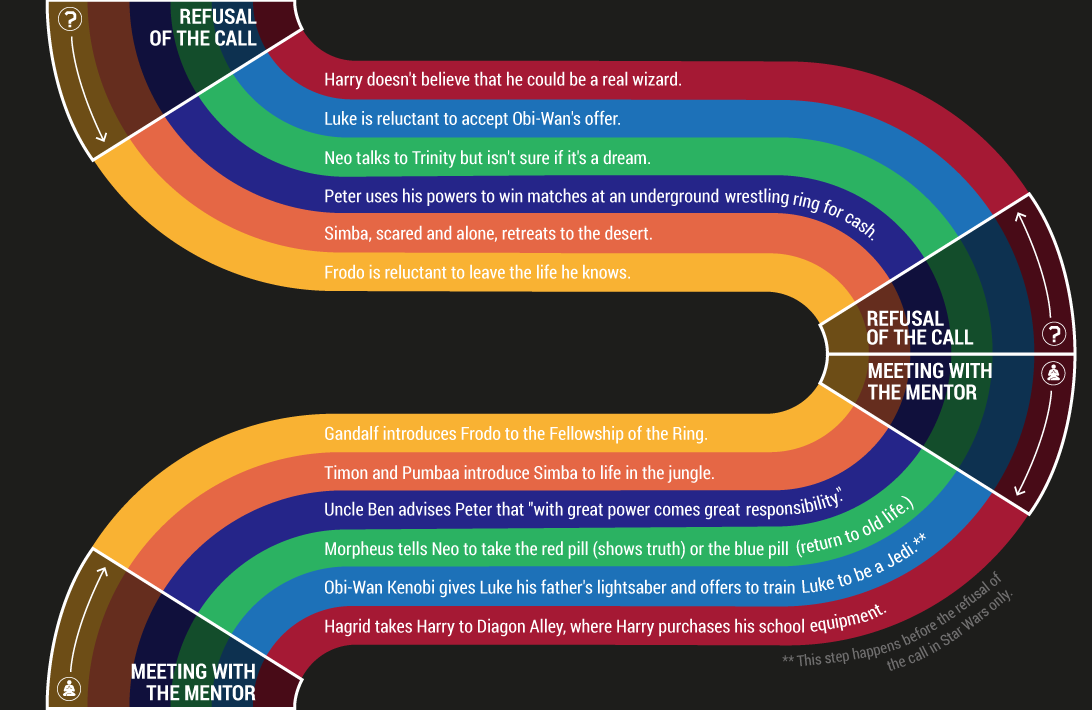
Consider for example the emotional life of Luke Skywalker. When this Aunt and Uncle - who he has been raised by for nineteen years and acted as his adoptive parents - are brutally immolated by stormtroopers, he barely sheds a tear. A man that he has only just met (Obi-Wan) confirms that they weren’t his real parents anyway, then Luke solemnly looks at the horizon and decides that it’s time to leave his home planet. Yet, when a mere two or three days later Obi-Wan is killed, Luke is overwhelmed by outbursts of grief. This absurdity exists because the template of the monomyth demands that the “Mentor’s Death” must be the emotional catalyst for the hero. Because the plot requires it, the people that he thinks of as his parents are discarded without mourning, never to be mentioned again at any point in the trilogy.
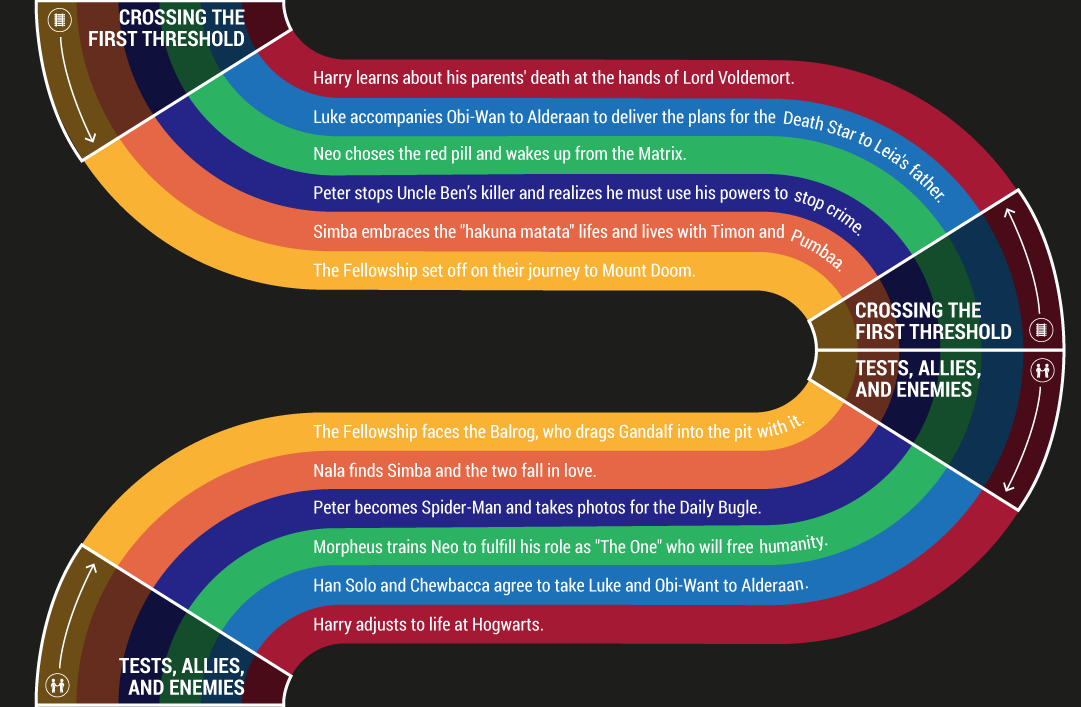
A critic might here interject, and point to the climax of the Return of the Jedi, where Luke disobeys his masters, embraces familial love, and redeems his real father. Does this not subvert my critique? On the contrary, Luke’s frankly sociopathic reaction to the death of his aunt and uncle prove that Lucas is not orchestrating any kind of internal revelation of the importance of familial love. If he were, then his adoptive parents would have been remembered and recalled. Or he would have shown moments of pining for a new father figure, or love of family life. None of this happens. Instead, Luke’s internal emotional life is incoherently distorted for the sake of structural expediency.
Despite its in-text claims, Obi-Wan’s death itself operates less as a martyrdom than it does as a simple theatrical performance. His famous last words “If you strike me down, I shall become more powerful than you can possibly imagine” is a direct calling to the mythic power of martyrdom, yet within the flat spirituality of Star Wars, all this actually means is that Obi-Wan will occasionally appear as a translucent ghost to give advice to Luke. It is hard to see how an occasional appearance as a ghost is “more powerful” than his presence giving advice at Luke’s side, or fighting alongside him with his sabre. Luke does appear to trust in the Force more after speaking to the ghost Obi-wan, but takes no inspiration or solace in the revelation that he’s walking on the path towards life after death. Lucas wanted to use the aesthetics of martyrdom because the narrative finds it useful, but he did not build the foundation of interpersonal love, relational grief, and shared spiritual understanding that is required to elevate death into true martyrdom.
For more on the mechanics of true Martyrdom, see my previous article below:

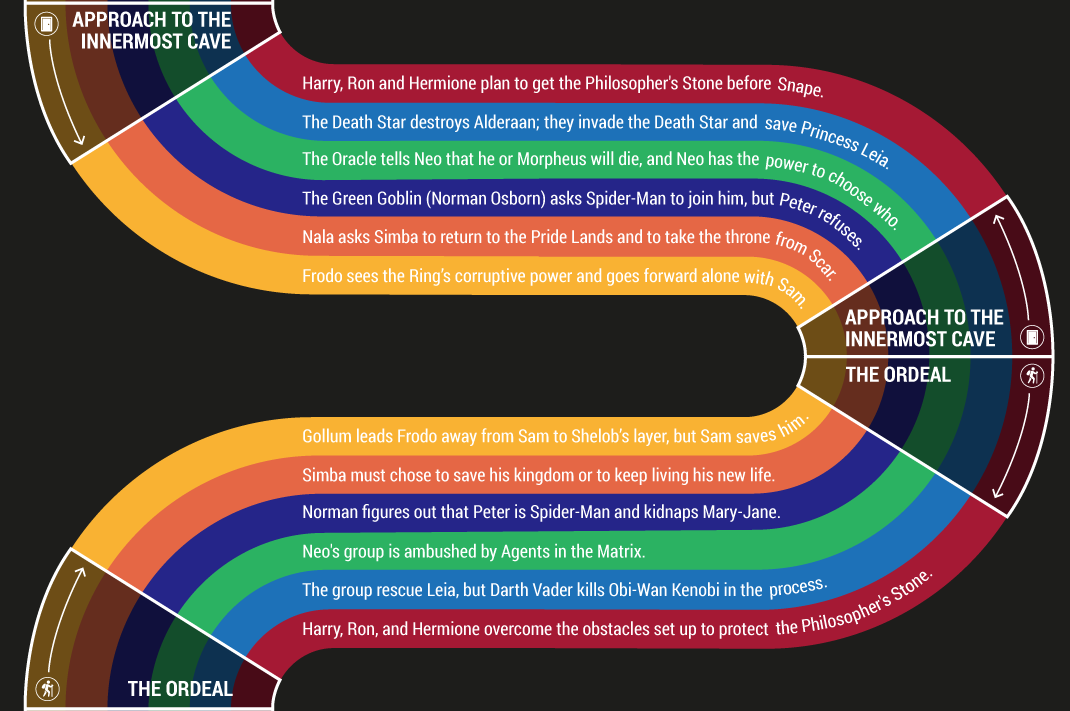
Of course, what makes Star Wars so effective is exactly its ability to compress and simplify disparate sources and traditions into accessible cinematic language. By stripping away both the socio-political baggage of his influences, and the need for psychologically coherent characters, Lucas created a universally legible story, and a mythic shorthand that has clearly resonated globally. As Umberto Eco pointed out when talking about the films: “Two clichés make us laugh. A hundred clichés move us”.
However, they remain still a string of clichés, and assembled from a series of radically different traditions at that. A hundred hooks hanging from the sky with nothing to support them. When you compress complex, culturally specific moral archetypes into a one-size-fits-all story, you lose the capacity for genuine ethical instruction.
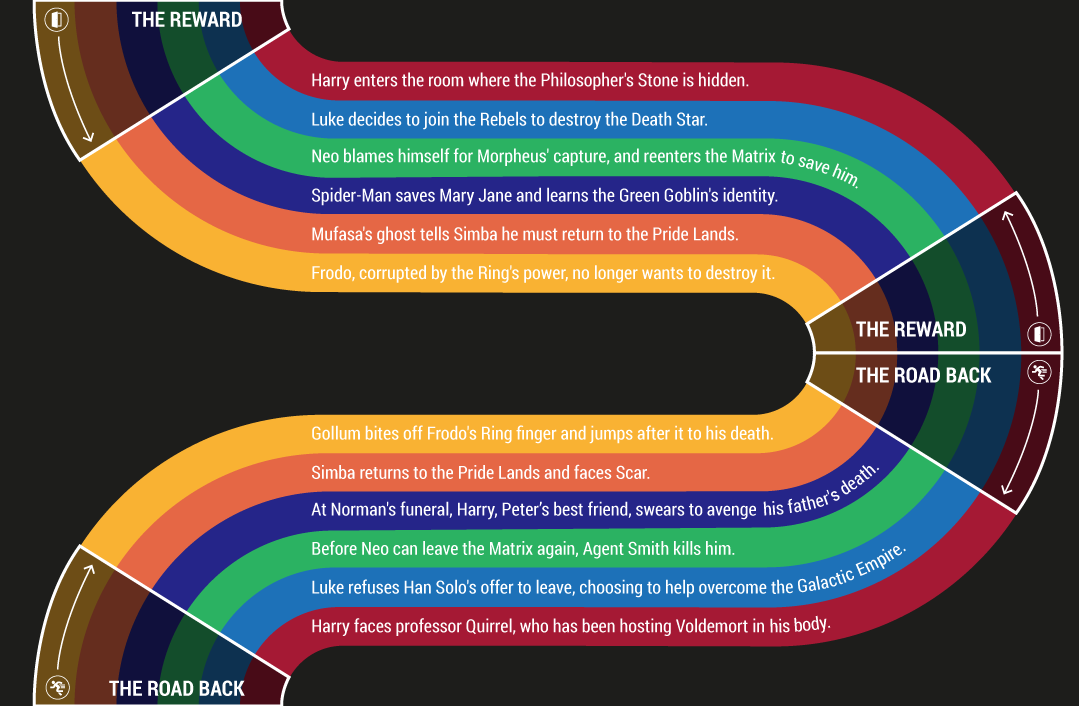
In his 80s, Joseph Campbell himself met and became friendly with George Lucas, years after the original trilogy was completed, and praised the films as examples of modern myth making. But one wonders how Campbell might have interpreted the films if they were not so transparently drawing upon his own work.
Campbell for instance, was a supporter of the Vietnam war, while the film’s Rebellion against Empire was explicitly inspired by the Viet Cong. His conservative and traditionalist world view would today likely leave him labelled as a far-right anti-semite (yes, really, look up his politics), and I suspect if he were around today, he would see the effects of Star Wars’ commercialisation of mythic power, and reassess his praise.
Perhaps my favourite Star Wars film isn’t by George Lucas at all, but by Seth MacFarlane, Family Guy’s Blue Harvest. Like Lucas, MacFarlane has a habit of amalgamating innumerable disparate fragments of other texts, stripping them of their underlying moral structures, and then forcibly hammering them into where he thinks that his stories can use them to best effect. Unlike Lucas though, he does this openly, and in the only intellectually honest way possible - as comedy.
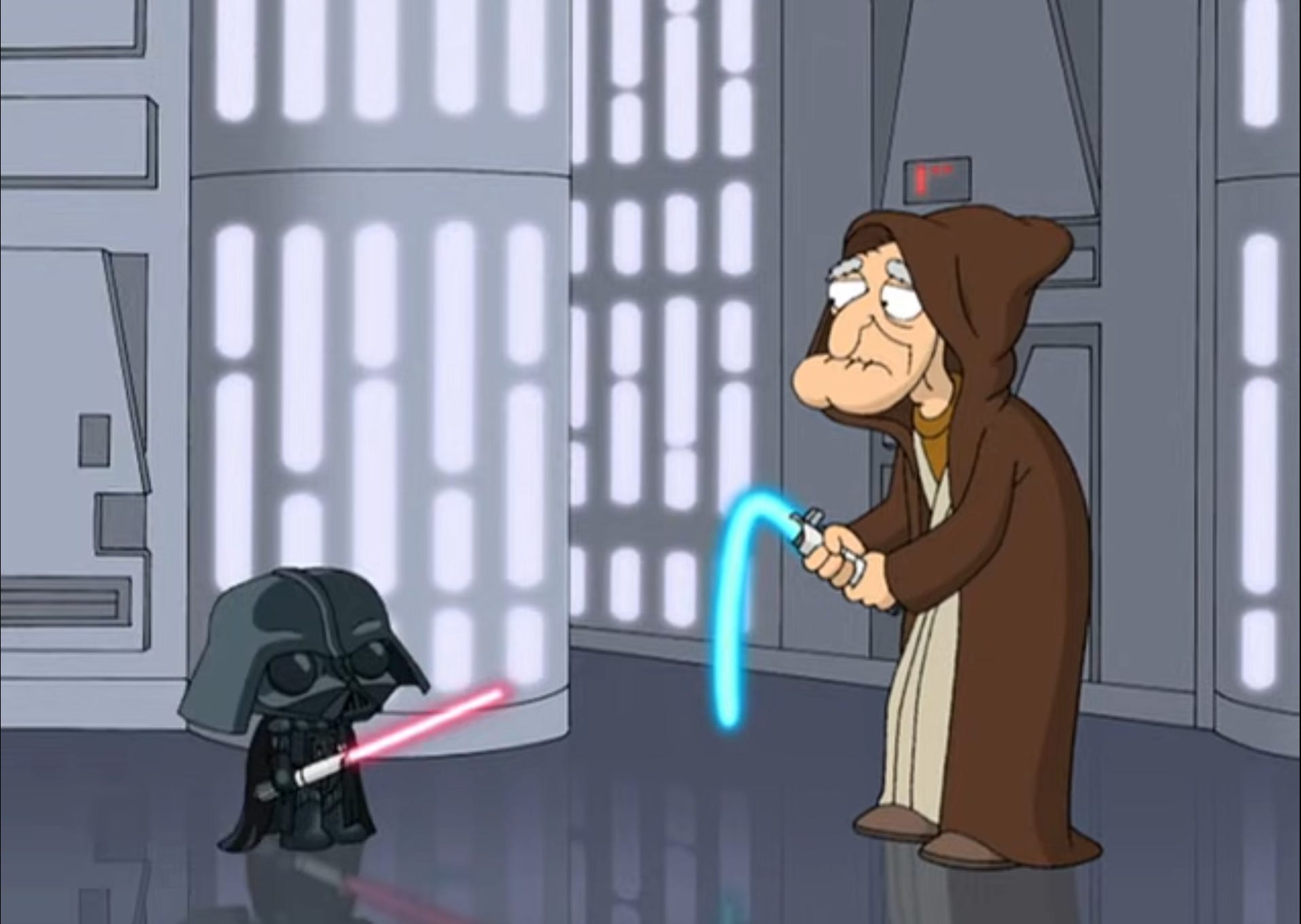
Two clichés make us laugh, but a hundred clichés? That can be hilarious.
III: The Grassroots Illusion
One of the most potent functions of the BTR is its ability to disguise top-down elite action as bottom-up, grassroots rebellion. The story in Star Wars is the apotheosis of this idea. The Galactic Civil War is framed as a spontaneous or inevitable uprising of the common man against a cartoonishly authoritarian oppressor. A fantasy promising that you too, could be a plucky thirst trapping moisture farmer piloting a space fighter into a fortress full of Nazis.
However nothing escapes the Iron Law of Oligarchy, not even the Rebellion. The leadership of which, consists entirely of unelected royalty, renegade military generals, religious leaders and the top politicians of the previous regime. While presenting itself as grassroots, the “people” have no democratic input at all into the structure of the Rebellion, its military strategy or the design of the post-war government. The Rebellion is simply a circulation of elites, where the foxes manipulate the masses to wrest power back from the lions. That the audience walks away feeling solidarity with the people who actually fought on the ground, makes it perfect BTR propaganda.
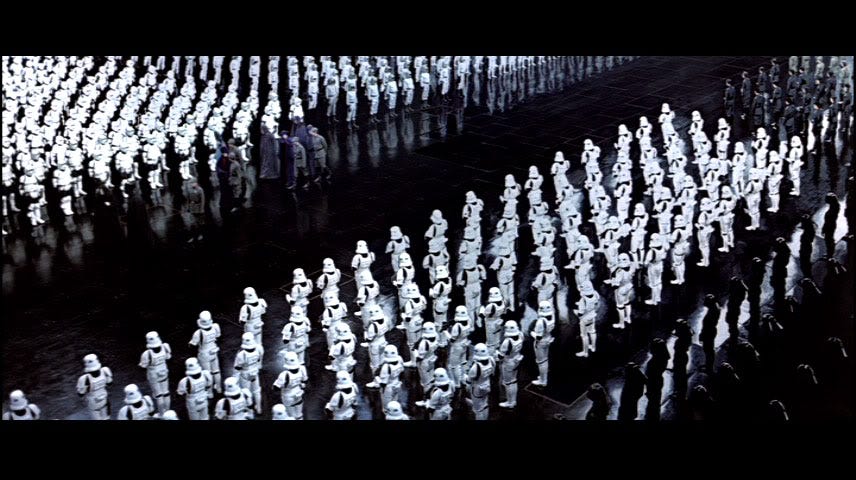
To justify this elite power struggle, the narrative relies upon the BTR’s dualistic moral system. On one side the Empire is coded quite simply as Hitler, its soldiers’ uniforms are inspired directly from mid-century Germany (but with less fashion sense), as are its marching formations and command structure. The tall boots, overcoats and peaked caps of the imperial officers are lifted directly from the SS and Wehrmacht. The films decline to articulate the political philosophy of the Empire beyond “peace and order”. The imagery does all of the work, and anyone inculcated into the BTR recognises them as what they are meant to be.
On the other side, the Rebellion reflects the affirmative side of the BTR’s morality - the dissolution of hierarches and traditional structures. There is no set uniform, people are free to dress according to personal or tribal preference. While the military strategy is agreed upon in advance, the tactics are presented as organic, ad-hoc and instinctual - primitive spear wielding Ewoks somehow triumph over heavily armoured walking robots multiple times their size. The result is a showcase of the power of radical self-expression over social conformity, a complete validation of American hippy culture. When Luke switches off his targeting computer during the trench run, it is the cinematic equivalent of John Lennon singing “I just believe in me”. Feeling, guided by vague spirituality, is all that is required.
Part IV: The Force as Liberal Morality
By now we’ve established that there simply was not a lot of deep deliberate thought in the creation of the world that Star Wars is set in, but that does not mean that it was without any inherent morality. Atomised liberalism is presented as an obvious good, and all characters exhibit a knee-jerk anti-authoritarian bent. The Empire, and by extension all empires, are evil by virtue of being structured hierarchies. This morality exists precisely because Lucas didn’t try and create it, but instead lived within it in America.
There is an idea that positing that quick, ill-considered thought is a route to revealing the unconscious mind of the author. This is Daniel Kahneman’s system 1 thinking - fast, associative, automatic - or the idea of “automatic writing” that was popularised in the 20s and 30s, whereby deliberately rapid writing or drawing was considered to be able to reveal the hidden hand of the guiding muses. Lucas’ deliberately imprecise use of differing concepts, the stringing together of multiple sky hooks and the refusal the build cranes (system 2 thought), fits perfectly within this tradition - and so the morality of the world he created becomes simply the morality of the world that he inhabited.
This post-war BTR morality is fundamentally antagonistic to classical Christianity, which demands submission to the Creator and adherence to his moral codes. The western world has never come up with a lasting replacement for this religious system, however, adherents to the truth regime stick to simply attacking the older order. Star Wars though took most of its ideas from Dune, which is absolutely full of religion, so it couldn’t simply live atheistically like its liberal modern creator. The solution was “The Force”. A unique manifestation of therapeutic deism, a buffet-style consumerist spirituality with an eastern tinge. The Force operates as an impersonal energy field that grants its users god-like powers without ever demanding any corresponding accountability or submission to divine law.
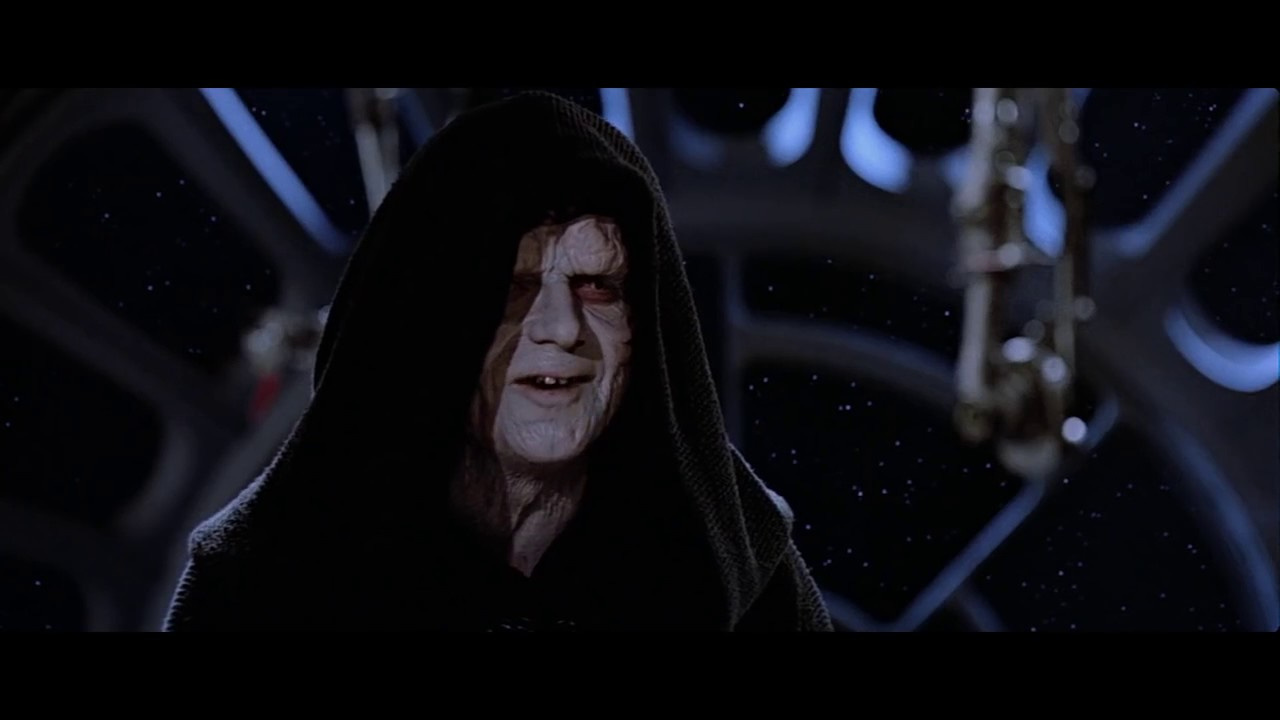
Good and Evil in this system, are not metaphysical concepts, but simply different states of mind. Take for example the throne room scene at the end of the Return of the Jedi. The Emperor Palpatine, who prior to the release of the prequels can be considered only as the ultimate avatar of the dark side of the Force, laughing and encouraging the protagonist to give in to his anger. Moral conflict has been reduced to a psychological test.
Lucas openly talks about how the Jedi religion was inspired by Buddhism and Taoism, but when analysed, this resemblance is clearly only superficial. Yes, like these Eastern religions, the Jedi demand a form of personal cultivation of spirit, but the process is never touched upon. Buddhists demand privation from material existence and desire, fighting against any Mara that might get in the way of Enlightenment. Taoists focus deeply on cosmological ritual, the flow of energy within a room or object, and acknowledgment of the good within evil, and the evil within good.
This concept of good and evil would be too sophisticated for Star Wars though, and so is ignored. Instead adhering to this, or to the classical Christian idea of privatio boni - the assertion that evil is not an equal or opposite to the good, but instead a privation, or corruption of it - Lucas adopts an anti-Christian, Magian worldview, where good and evil are exactly opposite, totalising elements of the universe stuck in permanent opposition to each other.
Other Jedi tenets appear to be created as if to be directly antagonistic to the Christianity that the BTR rejects. The Jedi forbid emotional attachment, whilst Christianity demands vulnerable attachment, and the primacy of love. This rejection of attachment is not just part of the Jedi philosophy, but a structural part of the films. Across the saga, stable family life is almost entirely absent, or actively destroyed. Luke is quickly orphaned, in the prequels Anakin is basically kidnapped from his mother (leaving her to remain as a slave), and later mass-murders other children. The natural, loving bonds of everyday life are implicitly, but consistently, belittled.
Part V: The Analogue Cope
One of the underdiscussed elements of the BTR is its particular form of techno-optimism - a belief that future technology will be human-centric and individually empowering. Science fiction had begun questioning this opinion decades before the release of Star Wars, but these dissenting opinions were ignored by Lucas, and the resulting films, and in particular the victory of the rebel alliance over the empire, serves to strongly reinforce the BTR’s niche form of techno-optimism.
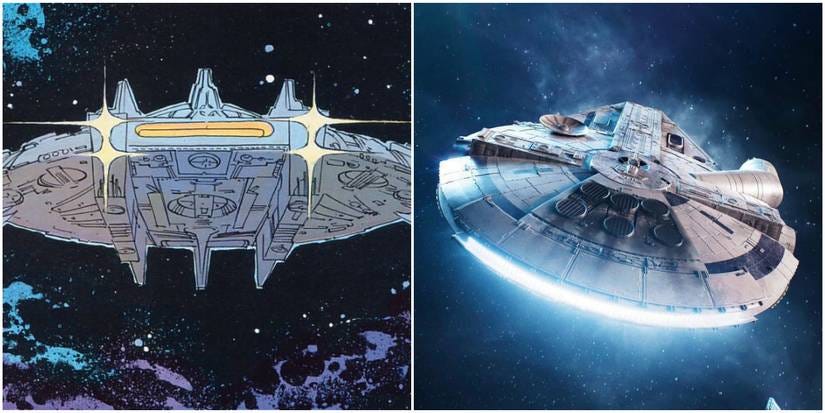
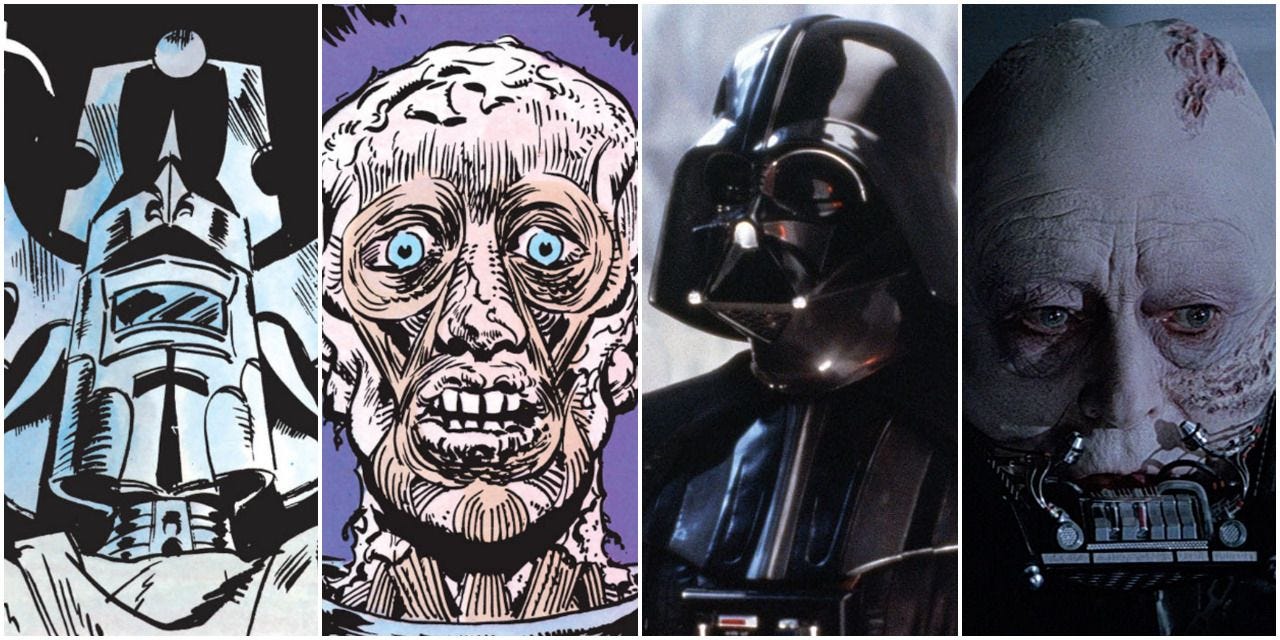
The Millennium Falcon for instance, operates as a symbol of blue-collar analogue agency. Han Solo successfully repairing a hyperdrive by hitting it with a spanner is a fantasy of the rugged individual conquering the machine. Its record speed, despite being cobbled together from largely junk yard parts, is a direct uncomplicated projection of 1950s American car culture into deep space. But forget the far future, or a long time ago in a galaxy far away, already today in 2026 this is all but impossible. We live in a world of restrictive proprietary hardware, micro engineering, and cryptographically sealed ecosystems. We are mechanically prevented from fixing all but the simplest hardware problems on our smartphones, let alone a faster than light propulsion engine.
This forthcoming loss of human agency to niche specialists, corporations and complicated technology was obvious to the writers of Star Wars’ Sci-Fi contemporaries, and serves to drive much of their plots. HAL in 2001: A Space Odyssey had already shown how technology could dominate man, instead of the other way around. The Alien series shows how humans could be subordinate to both corporate structures, and be helpless against hostile environments. Phillip K. Dick’s worlds explored how human agency is eroded by artificial systems. In the original trilogy, all of this is ignored in service of the BTR.
This dynamic is even more pronounced in the depiction of warfare. Humans can pilot space fighters through turns that would generate incredibly high G-force, unaided, with absolute ease. R2D2 rotates his round head at the same speed during these turns as he does when stationary. Physics is simply suspended to serve the narrative. The cockpits barely look airtight, but that is ok, as the lack of physics means that Jedi can probably just breathe in space. More genuine sci-fi, like The Expanse, take these physical limitations and use them as a core part of the problems of the world. In that series, humans born and raised in space have different, weaker, physical constitutions to those born on Earth or Mars, and the people from those planets feel no compulsion against using this strength to their advantage. To survive high G-force space combat, people on fighter ships are temporarily injected with a dangerous substance known as “the juice”, risking injecting more of this juice is a decision characters have to take in the middle of combat if they wish to engage in certain manoeuvres. The juice only prevents people from pooling their blood and losing consciousness, it does not prevent the damage to internal organs from the intense pressure of high g-force combat; after the combat, the crew of the ship is left bloody and bruised, and at risk of strokes and internal haemorrhaging.
Going back to Dune, Herbert’s painstakingly constructed cranes drive the plot, are used to create moments of character tension and justify its unique aesthetics. In Dune there is no AI because of the Butlerian Jihad, blades are used as primary combat weapons because their shields block fast-moving projectiles like bullets or arrows. If a laser beam hits a shield, the result is a catastrophic, nuclear scale explosion that almost certainly will kill the person who fired the weapon, and so lasers are strictly controlled and rarely used. In Star Wars, lasers are used very often, but almost never on target, and bladed weapons are able to combat them for some reason, and with no shields, there is no explanation for why conventional firearms are never used. AI exists, but lives in small metal cans as man’s bumbling pets, and computers are mostly comically simplistic. Man can fight personally, with honour, in this far future, simply because George Lucas shook his hands and said “magic”.
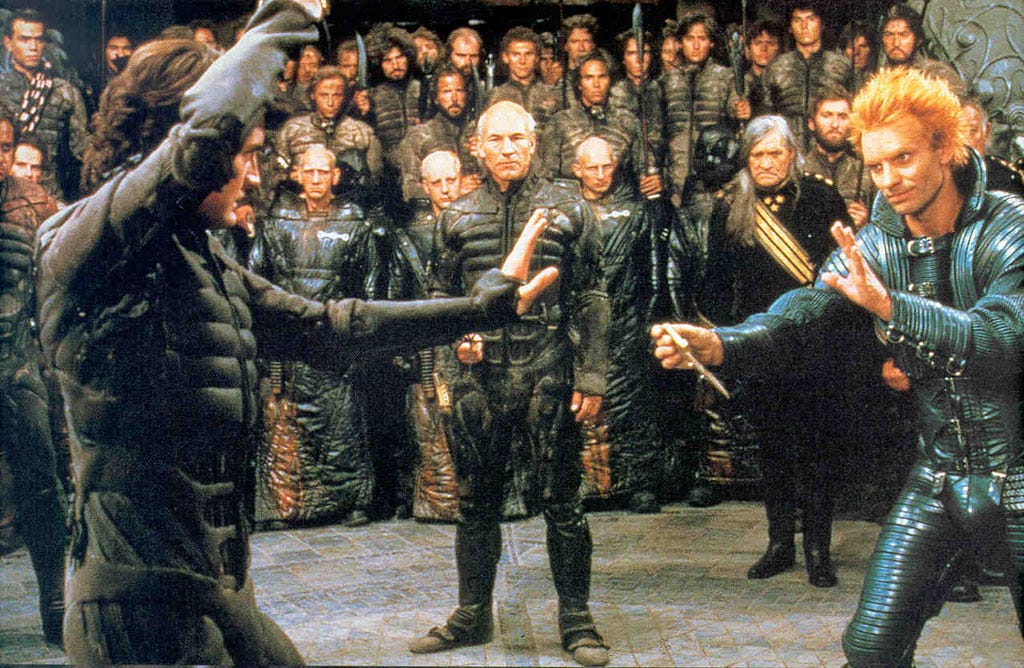
The dogfights in space are simply WWII fighter battles, but in a vacuum. Reminding the viewer again of the need to be vigilant against fascism, but also pretending that in the far future, the human eye and manual reflexes will be deciding factors in combat. The military of 2026 renders this laughable. In Ukraine, Zelensky has reported that the first ground positions have been captured entirely by ground robots, forcing the flesh-and-blood Russians to surrender without any risk to Ukrainian life. In Israel, unmanned drones are deployed to bomb targets in Gaza and Lebanon from Palantir-powered Kanban boards. Where humans still are in the pilot seat, the targeting of weapon systems no longer relies on the human eye, but utilises algorithmic decision making and beyond-visual-range telemetry. War has never been so impersonal. While there may always be “humans in the loop”, there will not always be humans in the pilot seat.
Star Wars, and the BTR, insists on flattering the egos of Western audiences, soothing them into believing that against all empirical evidence, the universe will always scale down to human proportions.
Part VI: The Prequel Vindication
The greatest proof of my thesis, comes ironically enough, from George Lucas himself. The prequel trilogy was not just his attempt to add backstory to the original films, but also to correct many of the mistakes that the original trilogy made.
Right from the get-go the prequel trilogy tries to build the cranes that the original lacked. Complex trade disputes, intergalactic taxation, and the machinations of the twilight of the republic take centre stage.
The change in tack is most pronounced in the treatment of the Jedi religion. Gone is the presentation of the Jedi elders as an ultimate demonstration of moral order; their inadequacy is on full display, and to the chagrin of his own fans, Lucas, deliberately or not, ends up deconstructing much of his own liberal mythology. The Jedi are no longer beyond politics, but are deeply politically entrenched, compromised, arrogant, and obsessed with their own status within the oligarchy of the republic.
Anakin’s life serves as a critique of not just the Jedi, but of what the Jedi should have been. Anakin, the prophesied one, was found late by the religious order, precisely because they were occupied with the machinations of the state. It ends up being Qui-Gon Jinn, a man who has deliberately placed himself on the outside of the Jedi council, who finds the young Anakin. The centre of his religious faith would have likely remained forever oblivious. Qui-Gon and his apprentice Obi-wan do what they can to raise Skywalker, but they discovered him too late for the full indoctrination of the Jedi religion to take effect. As a result, they are unable to prevent Anakin from forming the natural bonds of attachment that the Jedi faith is so disposed against. Anakin falls in love, and his love falls pregnant with his child.
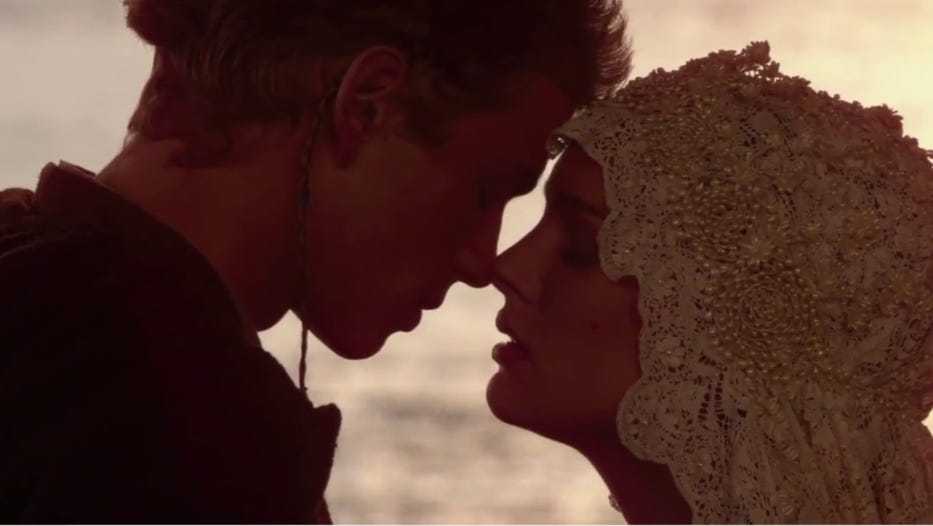
Unindoctrinated, Anakin is unable to process these profound emotional experiences within the confines of his religion. He is forbidden from seeking pastoral care from his own masters. The Jedi’s dual failing, to both inculcate him in their faith against attachment, and give him reason to resist such attachment, is within his mind, and the text’s viewpoint, combined together. He rebels against both theology and institution. To Anakin at this point, it is not just the faith that is wrong, but the order which upholds it. The force of evil, Palpatine, sees this weakness, and digs his claws in to exploit it.
At this point it is worth recognising that George Lucas had obviously put in significantly more work than in his first three films to try and explain the thoughts and actions of his universe. The various sociological cranes that he constructed, along with his insistence on utmost sincerity in his film’s acting, has meant that pretty much every scene within the prequel trilogy has become its own separate meme. Holistic narrative aside, this is the utmost praise that a piece of visual media can receive - that every contained instance within a story is so memorable as to be repeated in contexts never imagined for by the author.
Lucas is forced though to try and make his well-thought-out prequels coherent with his comparatively slap-shod original trilogy, and it is this complication that is at the root of much of the debate and disagreement as to whether or not the films are worthy of merit. Anakin is simultaneously, and empathetically, in rebellion against the commands of the Jedi - against attachment, against love, against procreation - while the plot demands that he also becomes Darth Vader. The plot is therefore is forced to portray his desire to save the lives of his love, and his children, as at the root of his fall into evil. This is not simply a repetition of the BTR’s anti-Christian bias, but a new, radical, nihilism. Falling in love, wanting to become a father, is deeply human, but anti-Jedi. Anakin’s fall to the dark side is not the result of the failing within his theology, but his theology failing him.
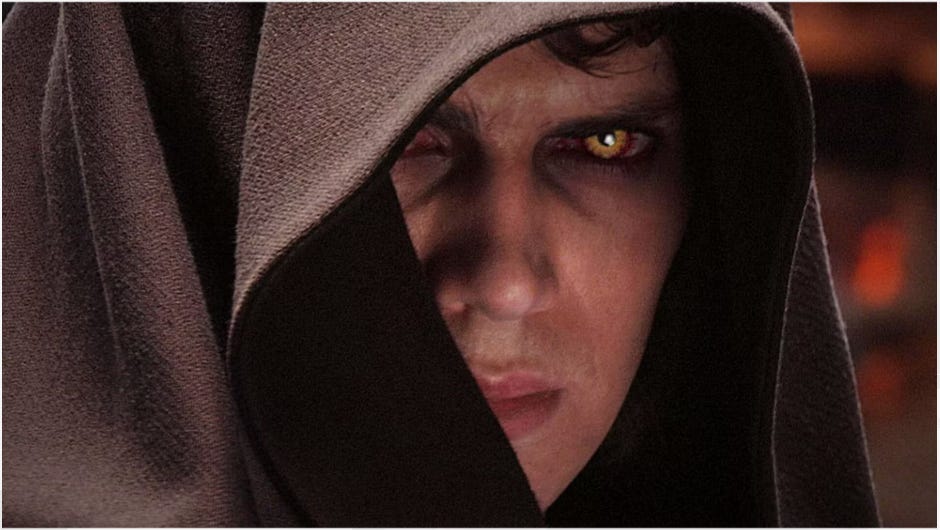
To a new, young, Zoomer/Millennial audience, this story is fun, engaging, and in line with much of their lived experiences. To the Gen Xer or Boomer, this tale is too contrary to the BTR to be truly loved. It points out too much of its folly, it presents too much of a coherent narrative against their precepts to be considered as truthful art. The lovers of the original trilogy see the cranes built to try and uphold the world of the original trilogy as removing the magic that serves as the coping mechanism for their entire worldview. Whilst to the Zoomers, who are comparatively less indoctrinated into the BTR, it so obviously shines a light on the parts of the human condition that is missing from the first trilogy, that any criticism against it only serves as a cause of confusion and argument.
Conclusion
The Star Wars saga stands as a towering testament to the limits of pastiche. Its fading, though still enduring, appeal lies not in its pure artistic merit, but in its position as the quintessential artefact of the BTR. It has allowed an entire generation to sit on their arses upon the vines of creation, tasting its fruits whilst simultaneously hacking away at its roots. By appropriating the visual language of Dune, Christianity, Bushido and more, without ever inheriting their moral compulsions, Lucas engineered a universe where transcendence requires no sacrifice.
The original trilogy proved that it is possible to temporarily suspend a cultural phenomenon entirely based on narrative skyhooks. However, hooks, no matter how clever, will always fall from the sky, and man will always search for load-bearing structures in their place. Lucas eventually realised this, but was unable to simultaneously build those cranes, and take along for the ride an audience that loved hanging from the skies at the same time.
...a world with no moral compass is a world which is rudderless.
The worlds of Star Wars are rudderless, like the Western world of its audience.
Perhaps, this is essence of Star Wars commercial success?